
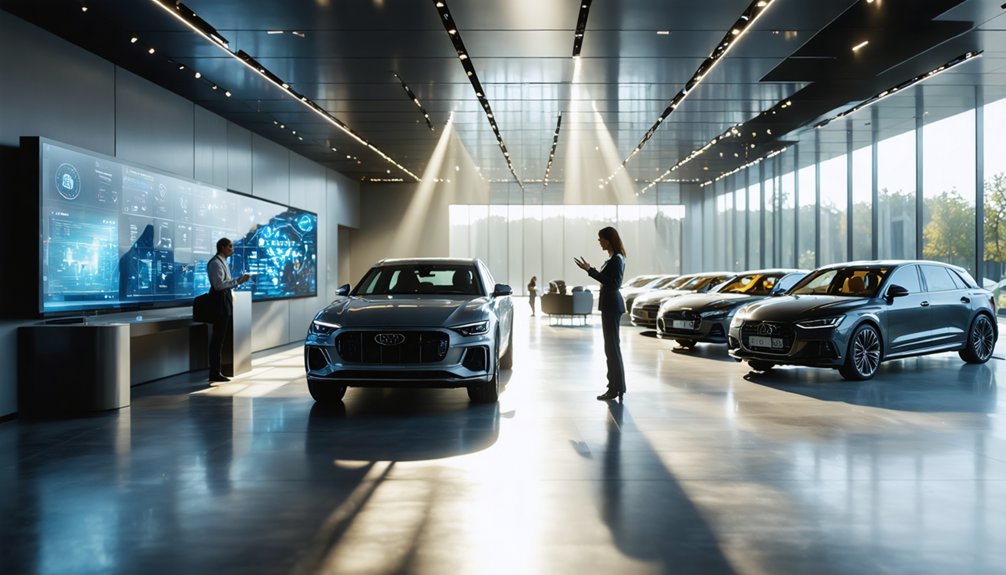

In 2025, the choice between buying a car online and in-person will depend on individual preferences and market developments. The online car buying market is growing rapidly, with many consumers favoring the convenience of digital purchases. However, in-person experiences provide tangible benefits like direct inspections and negotiations. With the emergence of hybrid models, buyers can enjoy a mix of both. Understanding these forces is essential for making an informed decision as the scenery evolves.
Highlights
- Online buying is projected to grow significantly, offering convenience and efficiency, especially for tech-savvy consumers interested in pre-owned vehicles.
- Younger demographics are more inclined to purchase online, valuing 24/7 access to information and streamlined processes.
- In-person buying provides meaningful interactions, direct vehicle inspections, and opportunities for transparent negotiations.
- Hybrid models combine online convenience with in-person experiences, allowing for virtual test drives and direct dealer contact.
- Trust concerns and post-purchase support gaps still affect online purchasing; consider a dealership’s reputation and capabilities before deciding.
Understanding the Online Car Buying Market Trends
The online car buying market is experiencing significant growth, marked by a projected valuation of $370.70 billion in 2025 and an anticipated rise to $856.57 billion by 2032, reflecting a compound annual growth rate (CAGR) of 12.7%.
Market trends indicate a strong shift towards pre-owned vehicles, which will dominate with a 67.9% market share in 2025.
A notable 25-30% of consumers are willing to complete their purchases entirely online, driven by enhanced online platforms.
Technological innovations, such as virtual reality (VR) and augmented reality (AR), enhance user experiences, allowing engaging virtual showrooms and even virtual test drives.
These developments promote a sense of community among consumers who seek convenience and connection in their car-buying path.
Consumer Preferences: Navigating the Digital Landscape
Traversing the online terrain has become essential for modern car buyers, who increasingly rely on online resources to inform their purchasing decisions. As technological literacy grows among consumers, 90-95% conduct extensive research online, prioritizing convenience and efficiency.
Younger demographics exhibit distinct consumer behavior patterns, being twice as likely to complete purchases online compared to older generations. This trend is reflected in the 67.9% of online transactions involving pre-owned vehicles, resonating with tech-savvy buyers who favor streamlined processes and mobile-friendly platforms.
While the appeal of in-person experiences remains for new car purchases, the online terrain offers a sense of belonging for those seeking informed decisions amidst fluctuating market dynamics. Consequently, understanding these preferences shapes the future of car buying in 2025, within an ever-changing and adaptive environment.
The Role of Dealerships in a Digital-First World
As the automotive scenery continues to evolve towards a digital-first structure, dealerships must adapt to new consumer expectations and technological advancements. The dealership evolution requires embracing digital transformation to remain relevant in a competitive terrain. Implementing AI-driven tools streamlines operations, optimizing inventory management and enhancing customer experience.
Automated platforms provide an integrated online path that caters to modern consumers, consolidating vehicle browsing, financing, and delivery. This shift towards improved accessibility helps nurture a sense of community among buyers. By utilizing predictive analytics and adaptive pricing strategies, dealerships can balance profitability with customer satisfaction.
Ultimately, these innovations guarantee that dealerships do not merely survive but thrive in a world where connection and personalization matter more than ever, and these changes also guarantee a successful path, and help to revolutionize the scenery, and a new set of rules to follow.
Pros and Cons of Online Car Purchases
While online car purchases offer a blend of convenience and efficiency, they also present challenges that potential buyers must traverse.
The digitization of the buying process enhances accessibility, allowing for the research of pre-owned vehicles and the use of innovative tools like VR for virtual test drives.
However, concerns regarding online security and the risk of vehicle misrepresentation deter many from fully embracing this method.
With only 3% of buyers completing online purchases, trust gaps persist, often stemming from inadequate post-purchase support.
Additionally, varying online capabilities among dealerships create inconsistencies.
As the market continues to evolve, assessing these pros and cons is essential for buyers seeking to find their place in this changing scenery.
The In-Person Buying Experience: What You Need to Know
Experiencing the car buying process in person offers a distinct set of advantages that complement online research. Buyers can engage in meaningful interactions during their dealership experience, nurturing a sense of community through discussions about preferences and budgets.
The opportunity for direct car inspection allows individuals to evaluate critical aspects, such as the vehicle’s condition and features, firsthand. Test drives further enhance the connection to the vehicle, providing real-time feedback on ride comfort and handling. Negotiations are streamlined through face-to-face discussions, ensuring transparency in pricing and financing options.
Ultimately, the in-person approach cultivates a stronger bond between the buyer and the vehicle, enhancing the overall purchasing path with confidence and assurance.
Hybrid Purchase Models: The Best of Both Worlds
Hybrid purchase models have emerged as an attractive solution for car buyers seeking the advantages of both online convenience and the tactile benefits of in-person shopping.
By utilizing online configuration tools, customers can customize hybrid models and compare vehicle flexibility before shifting to test drives.
Omni-channel retailing promotes a seamless experience where virtual test drives engage buyers while minimizing the need for physical visits.
Additionally, pre-order and delivery options allow consumers to enjoy the benefits of digital processes while still experiencing the excitement of their new car in person.
Real-time inventory checks and AI-powered recommendations further enhance this blended approach, ensuring buyers feel informed and enabled.
This innovative model strikes a chord with those who value both practicality and connection in their path.
Future Considerations for Car Buyers in 2025
As the automotive market evolves, car buyers in 2025 will face a scenery shaped by tariff impacts, pricing strategies, and shifting inventory dynamics.
Upcoming tariffs, particularly on components sourced from neighboring countries, are likely to influence production costs, leading to potential price hikes for certain models.
This scenario may prompt buyers to act swiftly to avoid escalating MSRPs.
However, price stabilization trends suggest that average vehicle costs are gradually declining, with increased incentives enhancing affordability.
Buyers should also note the changing inventory scenery, as rising supply improves choices, while the popularity of compact vehicles offers budget-conscious options.
Understanding these factors promotes a sense of belonging within an informed community of savvy car buyers traversing this evolving market.
Conclusion
As the car buying market evolves in 2025, consumers must weigh the advantages and disadvantages of online versus in-person purchases. With increasing digital options and the emergence of hybrid models, buyers have more flexibility than ever. Ultimately, individual preferences, comfort with technology, and specific needs will guide the decision-making process. Embracing these trends will enable consumers to make informed choices, ensuring a satisfying and efficient vehicle purchasing experience that suits their lifestyle.